Career route
How to become a Telecom AI & Automation Engineer
Put AI where it actually pays in a network — forecasting, anomaly detection, and the analytics the core already exposes.
Join for freeEvery course on this route free for 7 days
The route
- 15G Foundation
- 2AI for Telecom Networks
- Courses
- 2
- Video
- ~7.1h
- Certificates
- 2
Who takes this route
Working telecom engineers in operations, core, RAN, NOC or planning who are being asked about AI.
What you'll be able to do
- Tell where a model helps from where a threshold is enough
- Read what NWDAF exposes and use it
- Take a closed-loop use case from idea to a first deployment that cannot hurt you
The route, in order
2 courses · 13 modules · about 7.1 hours of video, hands-on labs throughout, and a graded exam at the end of each.
 1TELCOMA 5G Foundation5G Foundation5G system architectureNSA vs SAService-based architectureCore network functionsBeginner34 lessons~3.3h7 modules
 2TELCOMA AI for Telecom Networks SpecialistAI for Telecom NetworksSupervised & unsupervised MLModel evaluation & driftLLMs & RAG for operationsAI agentsIntermediate26 lessons~3.8h6 modulesBefore this: Recommended: 5G Foundation — or the free placement check
What you earn
2 verifiable TELCOMA certificates, one for each course, issued only after you pass its graded exam. Each carries a number and a QR code to a public page an employer can open without an account.
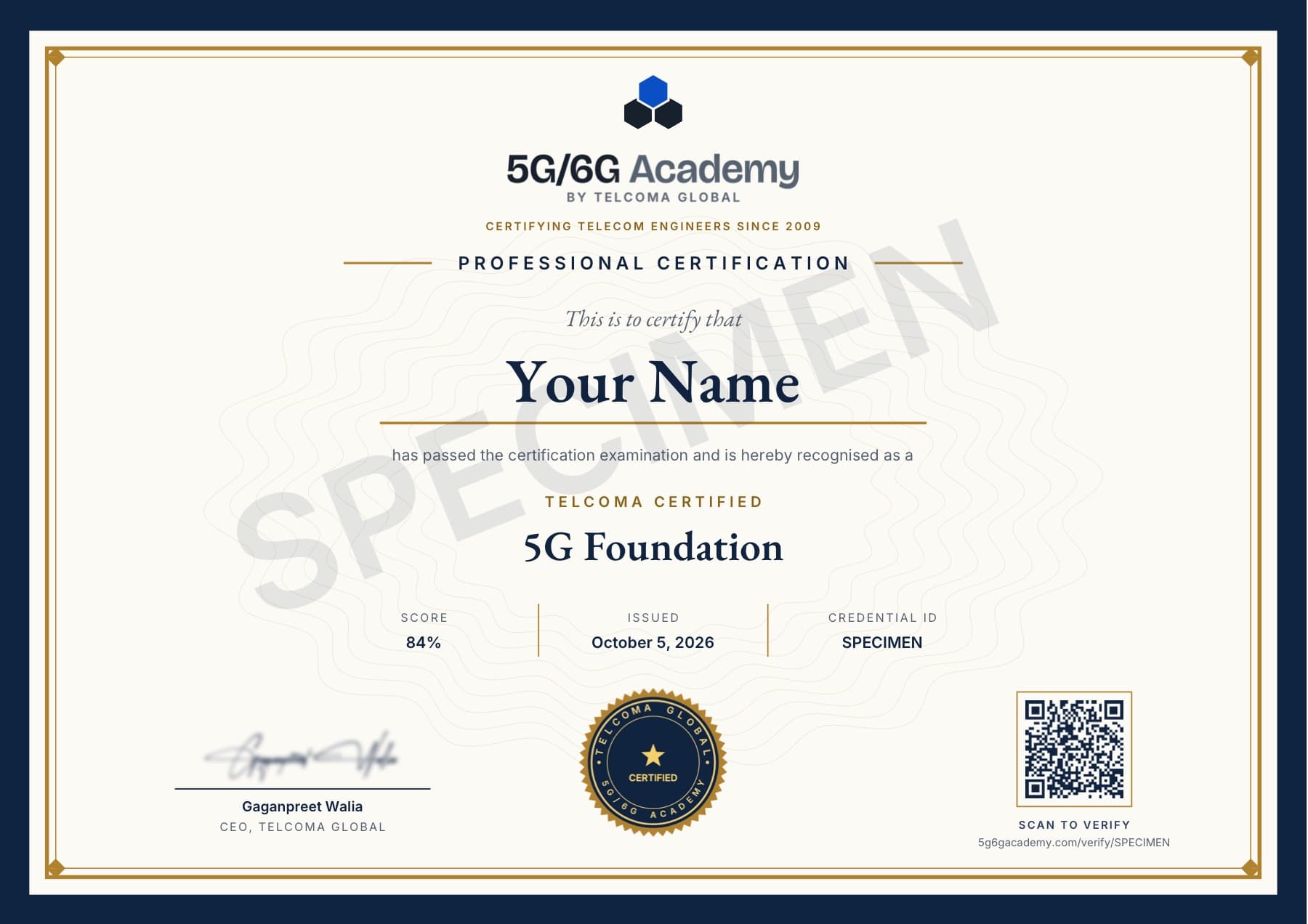
TELCOMA 5G Foundation
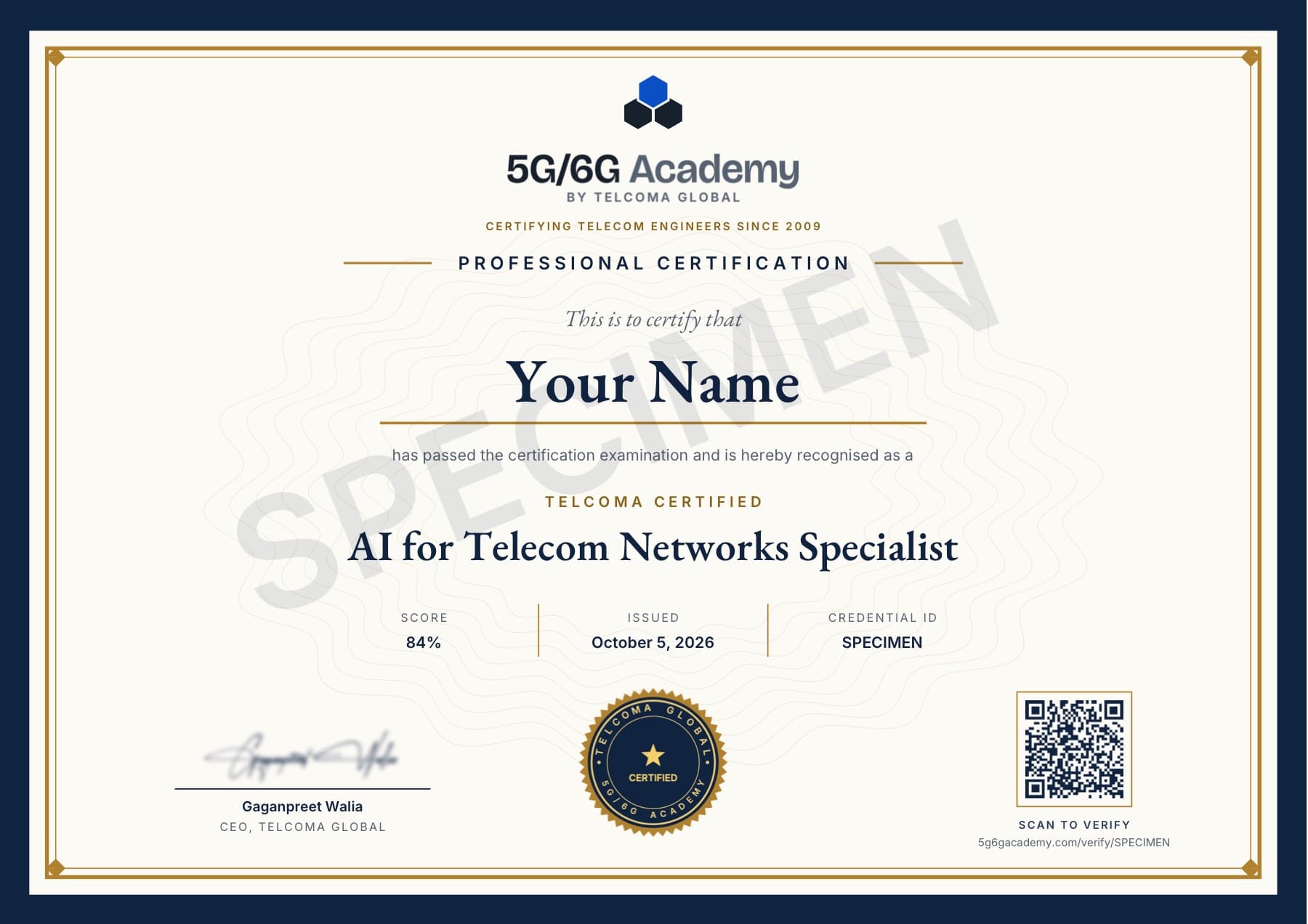
TELCOMA AI for Telecom Networks Specialist
Not the route you wanted? See all 12 career routes.